From Us

A Threat To The Ageing Population: Difficult Access To Healthy Food
The average life expectancy in Turkey has increased due to factors such as scientific developments in the field of health, widespread use of technological facilities and enrichment of diagnostic methods. The acceleration of Turkey's ageing graph can be considered as an important indicator for planning in the context of national demographic transformation projection.
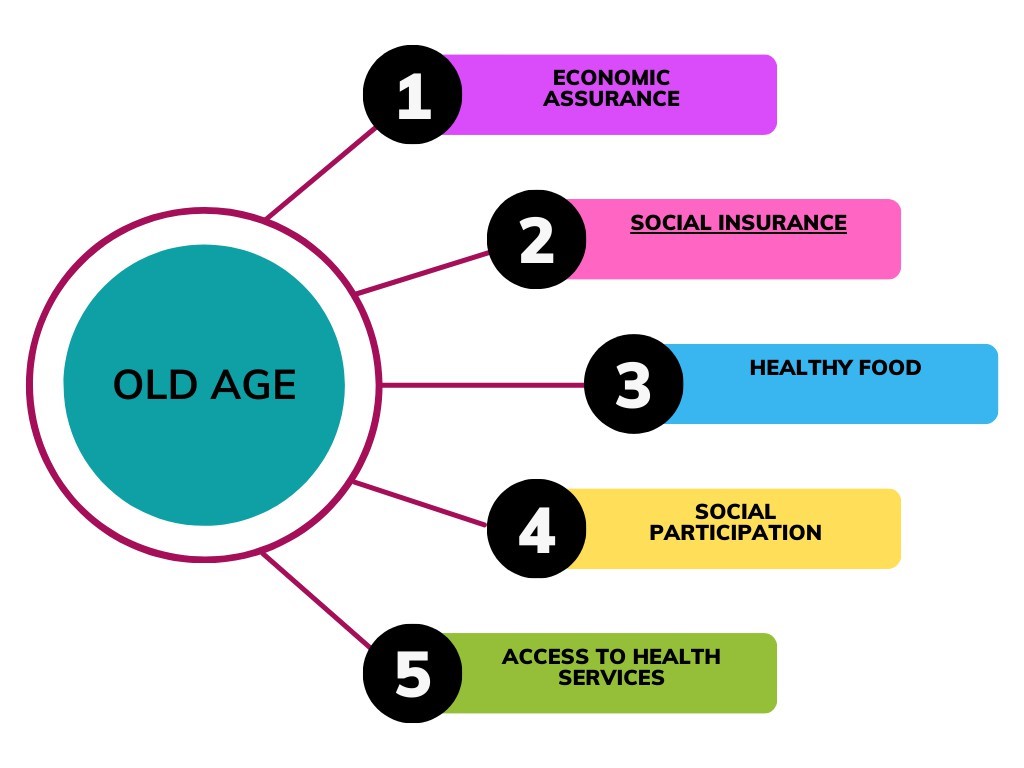
Longer life span makes a long old age period inevitable. There is no doubt that the psychological and physical needs of old age bring different requirements to the agenda of life than those of youth. Certain requirements can be mentioned for the healthy course of old age. The main headings of these needs are; access to healthy food, privileges in access to health services, social support and aids etc.
The current structure of social support and the efforts to strengthen this structure are of vital importance for the disadvantaged social group of the elderly. However, despite the significant contribution of social assistance, ‘old age’ in Turkey is a difficult social category to cope with. For example, inadequate pensions, inequality in income distribution, rapidly increasing food prices, unexpected health expenditures, inadequate retirement bonuses, etc. make access to healthy, safe and quality food increasingly difficult. Another group in a more difficult situation is the elderly who have no economic security such as pension or additional income. The economic dependency of this group on their families and caregivers is increasing day by day with much more difficult conditions.
The increase in the prevalence of Alzheimer's disease and dementia is not surprising with increasing life expectancy. In Europe, where life expectancy is longer than in Turkey, the prevalence of Alzheimer's disease and dementia among the elderly population is in the range of 7-10%, whereas in Turkey it is in the range of 5-7%. Alzheimer's disease and dementia are closely related to genetic factors, participation in cultural and social activities and dietary quality.
Proper nutrition is important in critically reducing the risk of the disease and slowing its progression. Studies show that a diet based on vegetables, fruits and fish, known as the Mediterranean Type diet, slows the progression of Alzheimer's disease by 30-40%. According to studies published in 2015 by Dr Martha Clare Morris and colleagues from Rush University, the MIND diet reduces the risk of Alzheimer's disease by 53%. The MIND diet recommends the consumption of at least six servings of green vegetables per week, fruit at least twice a week, five servings of nuts, fish and olive oil per week.

The data highlights the dramatic distance of the elderly in Turkey from the Mediterranean or MIND diet.
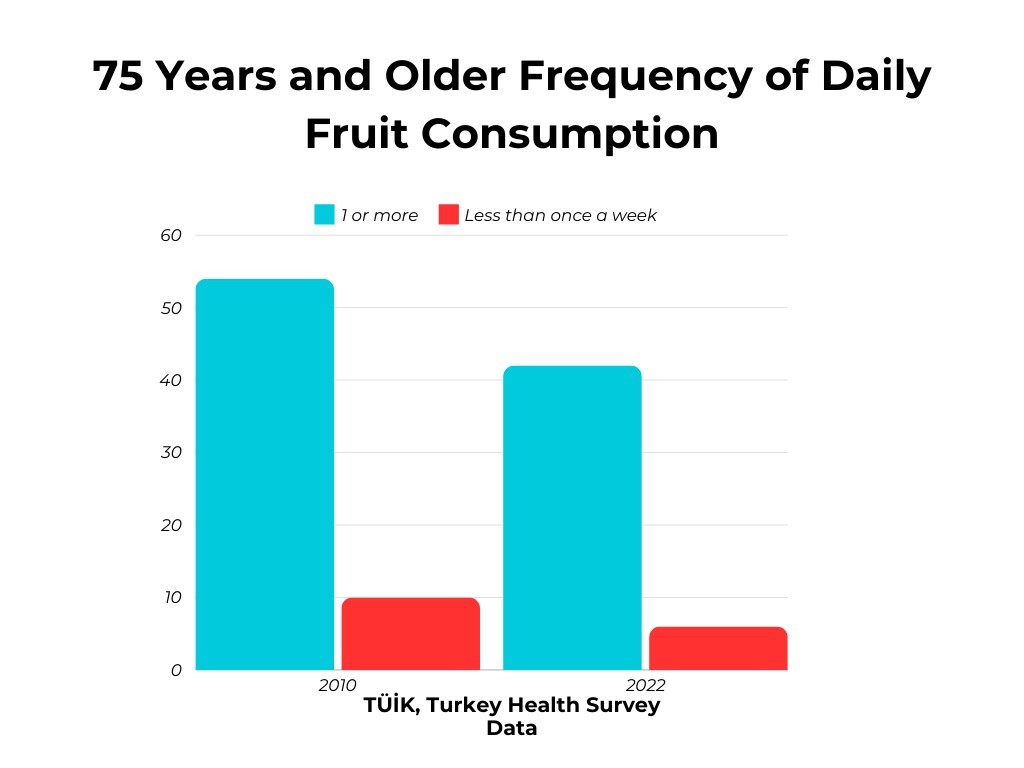
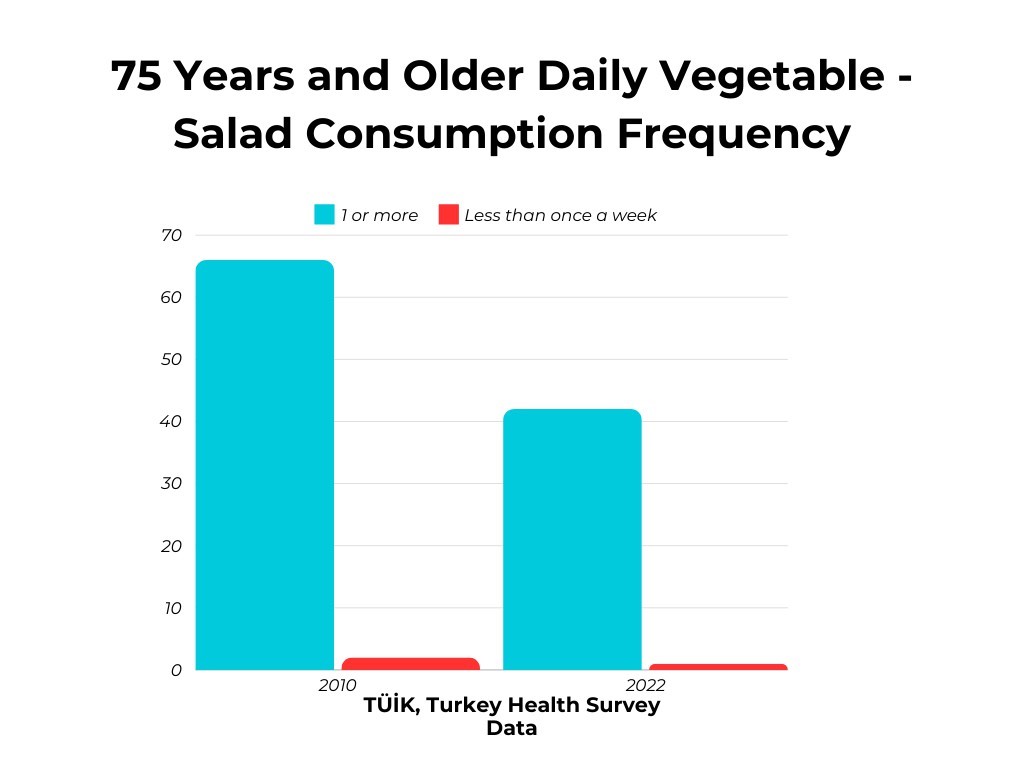
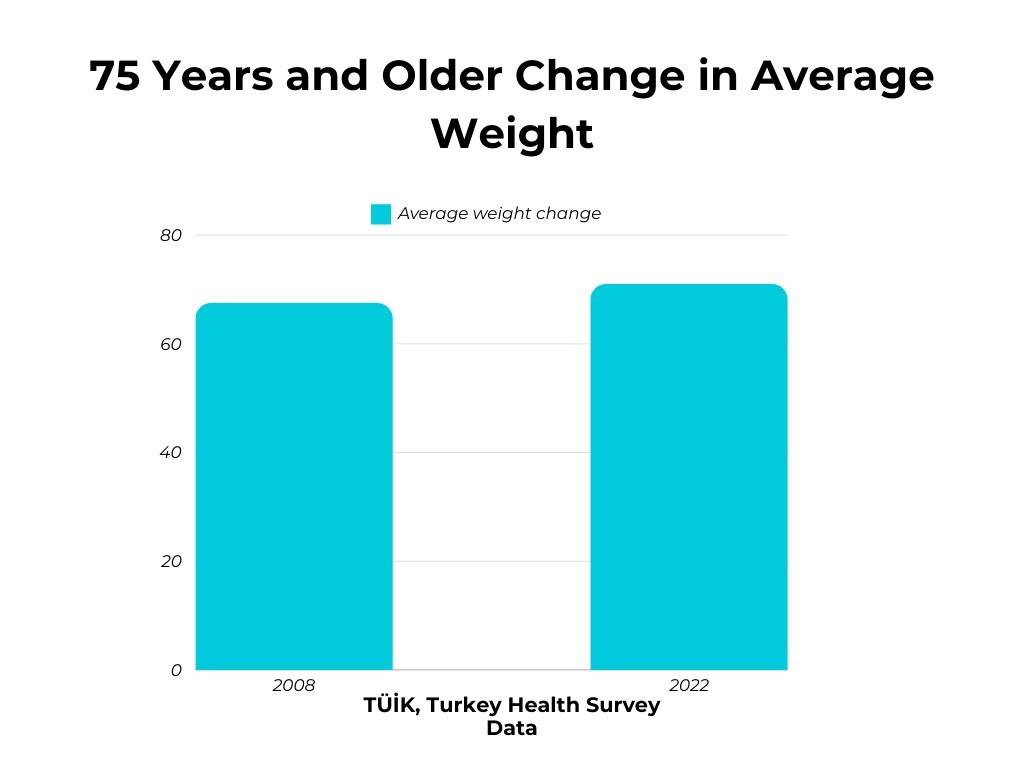
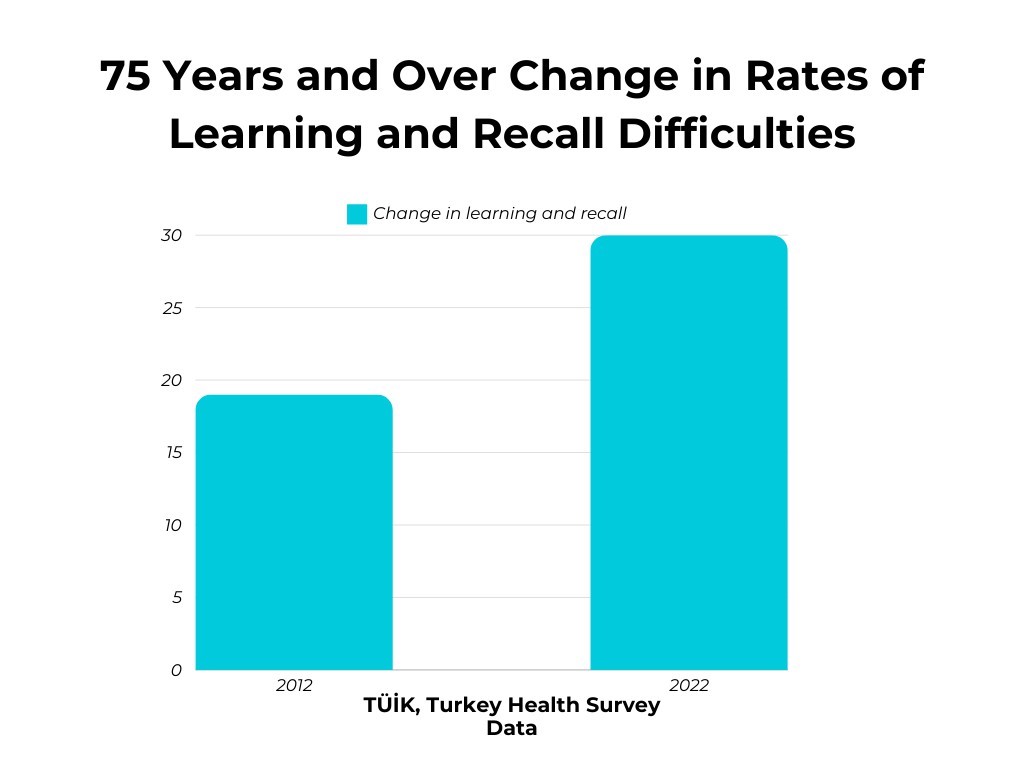
According to the Turkish Health Survey (TÜİK) Report, 18.7 per cent of the population aged 75 years and over reported learning and remembering difficulties in 2012, compared to 29.8 per cent in 2022. The increase in the rate appears to be 59 per cent. According to the data obtained from the same age group in the same survey, while 54.4 per cent of those who stated that they consume fruit once a day or more in 2010, this rate decreased to 41.9 per cent in 2022. Similar results were observed in the consumption of vegetables or salads. In 2010, 65.8 per cent said that they consume vegetables or salads once a day or more, while this rate decreased to 42.1 per cent in 2022. Nevertheless, weight gain, which can be interpreted as the final result of unhealthy nutrition, was also observed in this age group. While the average weight of the population aged 75 and over was 67.5 in 2008, it was 71.2 in 2022.
It is almost everyone's wish to live a long, healthy and happy life. Statistics show that our lifespan is indeed getting longer year by year. The positive, ‘life-extending’ factors such as global developments in the field of health, the increase in the variety of diagnostic methods and the widespread use of preventive treatment have of course been achieved with the cooperation of public power, state organs and scientific institutions. In order to ensure a healthy ‘ageing’ of the population, which is getting older year by year and whose ‘life span is getting longer’, the relevant public institutions should pay more attention to the elderly voice of statistics.
Turkey has the traditional and widespread habit of including vegetables and fruits in its cuisine and is a country with geographical suitability for vegetable and fruit production. However, the difficulty of access to and consumption of food, especially by the elderly population, is increasing day by day. This situation not only leads to crises in the health system, but also has the possibility of evolving into social crises and requires urgent and permanent measures.
The Bells are Ringing